Non Western Art Piece Mayan Mayan Art in Western Museums
A monthly review of global art news from an absolutely fallible viewpoint.
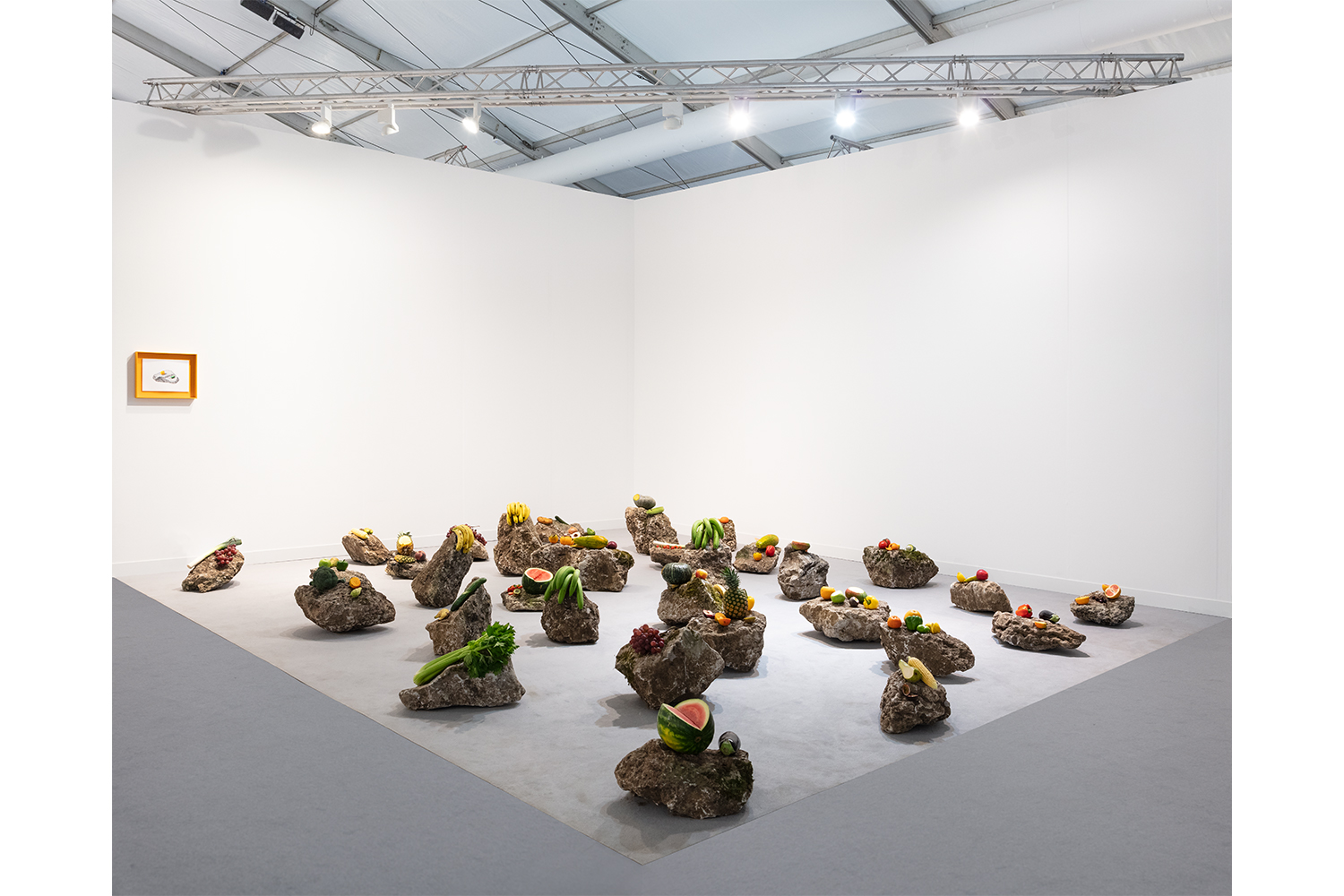
"We are the custodians, non the owners," Tate curator Catherine Forest said in The Art Newspaper, speaking about the gallery's recent conquering of a work past Edgar Calel, shown by Proyectos Ultravioleta at this yr'southward Frieze London fine art fair. Stefan Benchoam, co-founder and director of Guatemalan gallery Proyectos Ultravioleta, spoke to me nigh aegis, Mayan cosmovision, and the radical potential of non-Western modes of collecting and caring for art.
Edgar Calel'southward piece of work (b. Guatemala) explores Mayan Kaqchikel spirituality, cosmology, and community, and the enduring racism, social exclusion, and culture erasure that Guatemala's Indigenous keep to fight. Over the form of the state's history, Mayans accept faced Spanish invasion, forced land dispossession, and "ladinization" (the and then-chosen "civilizing" of Indigenous people), and withal they have nevertheless maintained a culture of resistance that is embodied in Edgar Calel's practice.
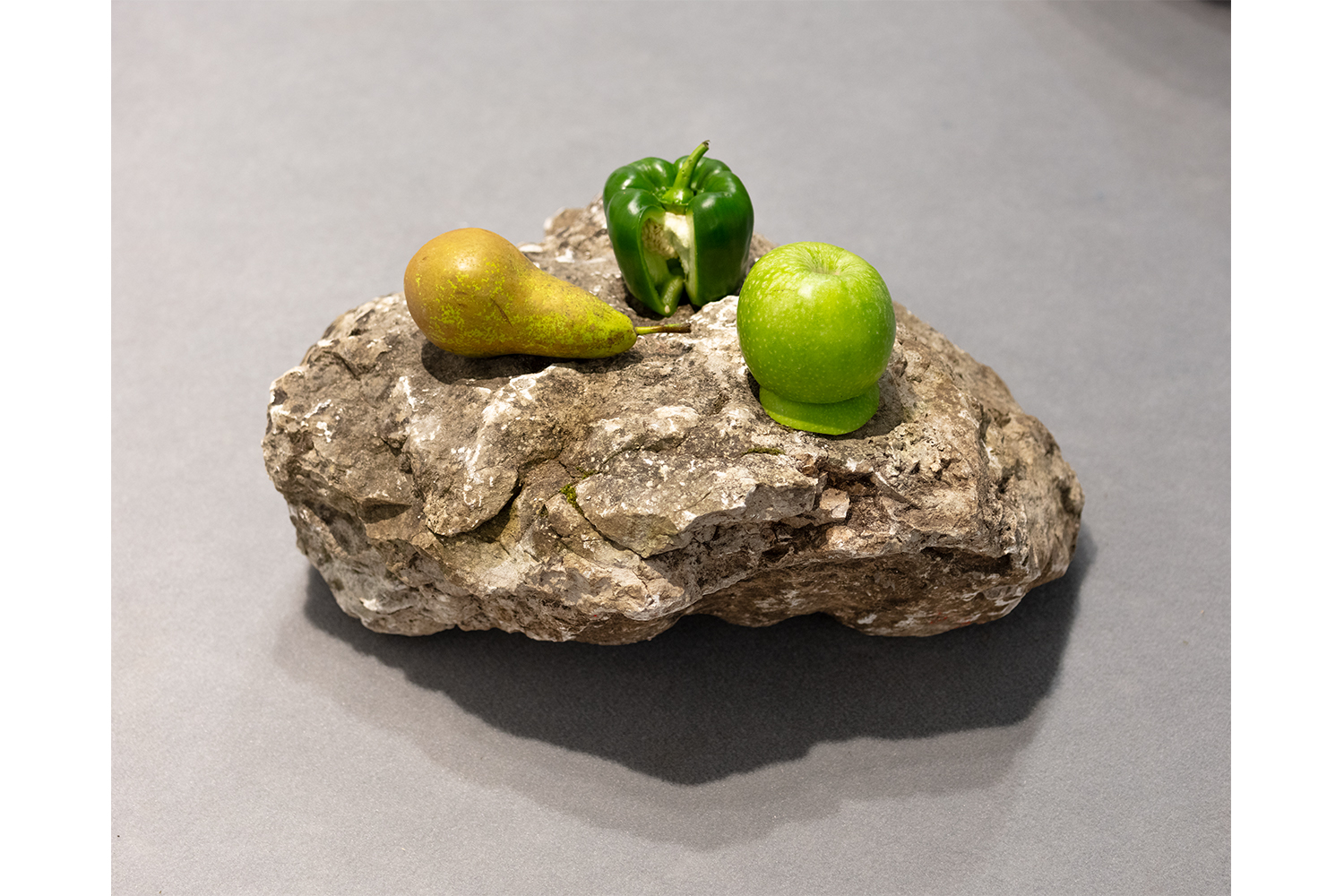
The piece of work from Frieze is titled Ru k' ox k'ob'el jun ojer etemab'el (The Repeat of an Ancient Form of Cognition). Stones become sacred sites of ritual, and the fruit and vegetables on the superlative, offerings to the land and ancestors. Calel wrote an accompanying dedication: "We are grateful for beingness able to walk together with them, and for beingness able to walk together with them, and for the weight of our body on the hills and valleys."
Continuing in for the artist, who was unable to brand the journey from Guatemala to London because of COVID travel restrictions, on Tuesday, before Frieze opened, Ulrik López performed a private ritual. Currently resident at Delfina Foundation, the Mexican-Puerto Rican artist burnt copal incense, soaked the stones in alcohol, arranged chopped fruit and vegetables on top, and gave thanks to the abuelos (ancestors).
Food is key to debates around cultural appropriation. Every bit bell hooks writes in the essay "Eating the Other," the commodification of Otherness is an assertion of white supremacy that turns the complexities and particularities of race and civilisation into a "spice" to be consumed, to "liven up the dull dish that is mainstream white culture." Organic and impermanent, incomplete until ritualized, information technology transcends the stars; non-sensible to viewers who cannot look beyond their optics, Edgar Calel's work refuses to be swallowed upwardly by consumer culture, resists backer commodification and Western museums' colonial drive to possess and hold.
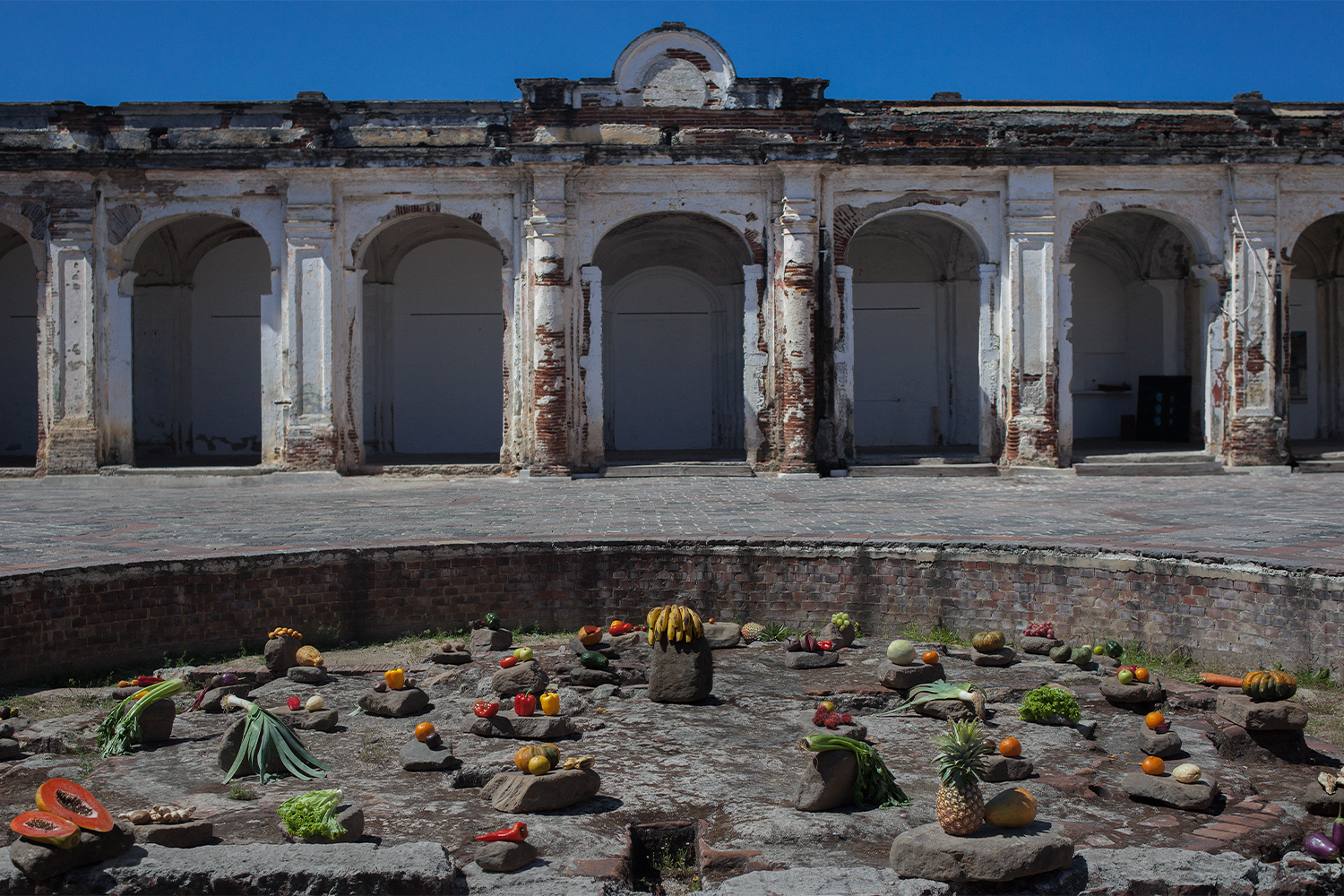
Henry Broome: Nether different titles, the work has been installed at Santo Domingo Convent in Antigua Guatemala, Guatemala, and the Serrinha practise Alambari nature reserve in the country of Rio de Janeiro, Brazil. The sites provide links to Mayan bequeathed claims to land and the history of colonialism and ongoing racial oppression in Republic of guatemala. How does the creative person's work resist and perchance remain incomplete in the frequently sterilized, hyper-commodified environments of art fairs and white cube galleries, the dominant forms of exhibition space in Western fine art?
Stefan Benchoam: Numerous versions of this work exist to engagement. Each version is a new work, which is why each one bears a different title. Each has dissimilar characteristics: the type of produce, the ways the rocks occupy the space, the ritual performed, and through it, the energies gathered are different each fourth dimension. The first version was an untitled happening, which was made in collaboration with Mexican-American artist and filmmaker Rosario Sotelo and took identify in Calel's sometime studio in his hometown of Comalapa. Various neighbors and spiritual guides attended, many bringing fruits and vegetables as offerings for the ceremony, which transformed the rocks into a sacred site to thank those that came earlier.
A 2d version was shown in 2014, titled Abuelos (although the most literal translation of the word is "grandparents," it is frequently used to refer to ancestors in Mayan cosmology). The work was some other collaboration with Sotelo, which included an 8mm moving picture documenting a small and controlled burn, office of an intimate candle ceremony at Iximché, one of the most sacred Mayan sites in Guatemala. Abuelos was presented at the 19 Bienal de Arte Paiz, the first time information technology was shown in a proper Art context (with a upper-case letter "A"). The Bienal was co-curated by Cecilia Fajardo Hill and Pablo José Ramírez, and others. Pablo is coincidentally now adjunct curator of First Nations and Indigenous Art at Tate Modernistic.
Since then, Calel has presented v new versions of the work every bit sole author. Each version adapts to the context information technology'south presented in, whether installed at an art off-white like Frieze, or embedded within nature or bequeathed lands in Brazil, sites that straight confront the colonial impositions that the Mayan people have and proceed to face. In a way, the work is complete as soon as it is ritualized, yet it's besides a live entity that is generous and allows for numerous opportunities for learning that are revealed each fourth dimension, but only if we are willing to listen.
HB: Tate curator Catherine Wood said, "We are the custodians, not the owners." The gallery has kept the stones from Frieze, if not the fruit, which would otherwise rot in storage. What are the specific contractual differences betwixt ownership and custodianship?
SB: Tate has non caused indefinite ownership of the piece of work but rather accepts temporary aegis for thirteen years, through which Calel offers an opportunity to learn from the lessons stored inside the work, and the organisation of noesis that information technology holds. Afterwards which time, the temporary aegis can exist extended for some other xiii years or sold to a different institution. If no new aegis is agreed, the work can be disassembled and get dorsum to its rightful owner: nature.
In recognition of the Maya Kaqchikel communities who adult the systems of cognition embedded within the piece of work, Tate has too agreed to make a financial contribution to a humanitarian cause in Comalapa that will exist adamant by Calel in the weeks to come.
HB: How might the concept of custodianship and the Mayan cosmology the artist's work draws on suggest a radical alternative to Western museums' colonial acquisitiveness?
SB: Custodianship is a practice of care which is rooted in Mayan epistemology and challenges the Western logic of ownership and perpetuity. The work reveals the possibility to consider alternative forms of care that have been good by Mayan people for hundreds, if not thousands, of years. For case, for the Cofradías (Mayan religious fraternities), spiritual resources vest to the communities that care for them, and aegis constantly changes from family to family.
Each menses of custodianship with Tate will last 13 years, a number which corresponds to the thirteen energies possessed by nahuales. (A nahual is an creature form that a person can take. According to the Mayan cosmovision, there are twenty nahuales, depending on which day a person is born.)
The artist has proposed at that place could be up to seven altars that be simultaneously, each covering a item geography: Europe (the one presented at Frieze, now under the custodianship of Tate), North America, South America, the Caribbean, Africa, and Asia, and a terminal altar that will always remain in Republic of guatemala. The number seven is another important number in the Mayan cosmology, relating to the story of Wuqub Kaqix, which is from the sacred Mayan book of creation Popol Vuh. Wuqub Kaqix (or Seven Macaw) is the deity of the seven stars of the Big Dipper. He thought he possessed the brightest lite in the sky, even so the sun returns later on a long nighttime, offering him, and all of us, a lesson in humility.
Every bit a model of collecting and caring for art, custodianship gives Western museums a radical opportunity to reconsider their curatorial practices. Custodianship offers a way to collect works conceived from completely different epistemologies, without compromising their creative, conceptual, and spiritual integrity.
paulthaveruld1990.blogspot.com
Source: https://flash---art.com/2021/11/stefan-benchoam/
0 Response to "Non Western Art Piece Mayan Mayan Art in Western Museums"
Post a Comment